 Good
Guides
Language
EnglishCurrency
US dollar · $Prices on GetYourGuide appear in your chosen currency.
Guide · Travel time
The Best Time for Paragliding on Madeira
Madeira is mild all year round, but rain, clouds, and day length change with the months. Here you can see when conditions are usually most favorable for a tandem flight.
Check availabilityfrom $214 · free cancellation
Editorial team gleitschirmfliegenmadeira.comUpdated on 5 October 20266 min read5 sources
In short
- 01Mild all year round
- Average 15 °C in winter up to 25 °C in summer.1
- 02Driest months
- In July there is not a single day with notable rain in Funchal.2
- 03Rainier months
- From October to March, rain is more frequent, with 6 rainy days each in February, March, and October.2
- 04Longest days
- In June, the sun is above the horizon for 14.3 hours.2
- 05On the day of the flight
- Whether a flight takes place is always decided by the pilot based on wind and weather.
Flying all year round
The question of the best time for paragliding on Madeira has a gratifying answer: Basically, all months are suitable. The island is mild all year round, with average temperatures from 15 °C in winter to 25 °C in summer.1 Frost and snow, which end winter flying elsewhere, play no role along the coast.
What changes over the course of the year is rain, clouds, and day length. In summer it is drier and brighter, in winter more frequently cloudy and wet. For a tandem flight this means: in summer the chances are greater that your preferred date will work out; in winter you should plan more backup days.
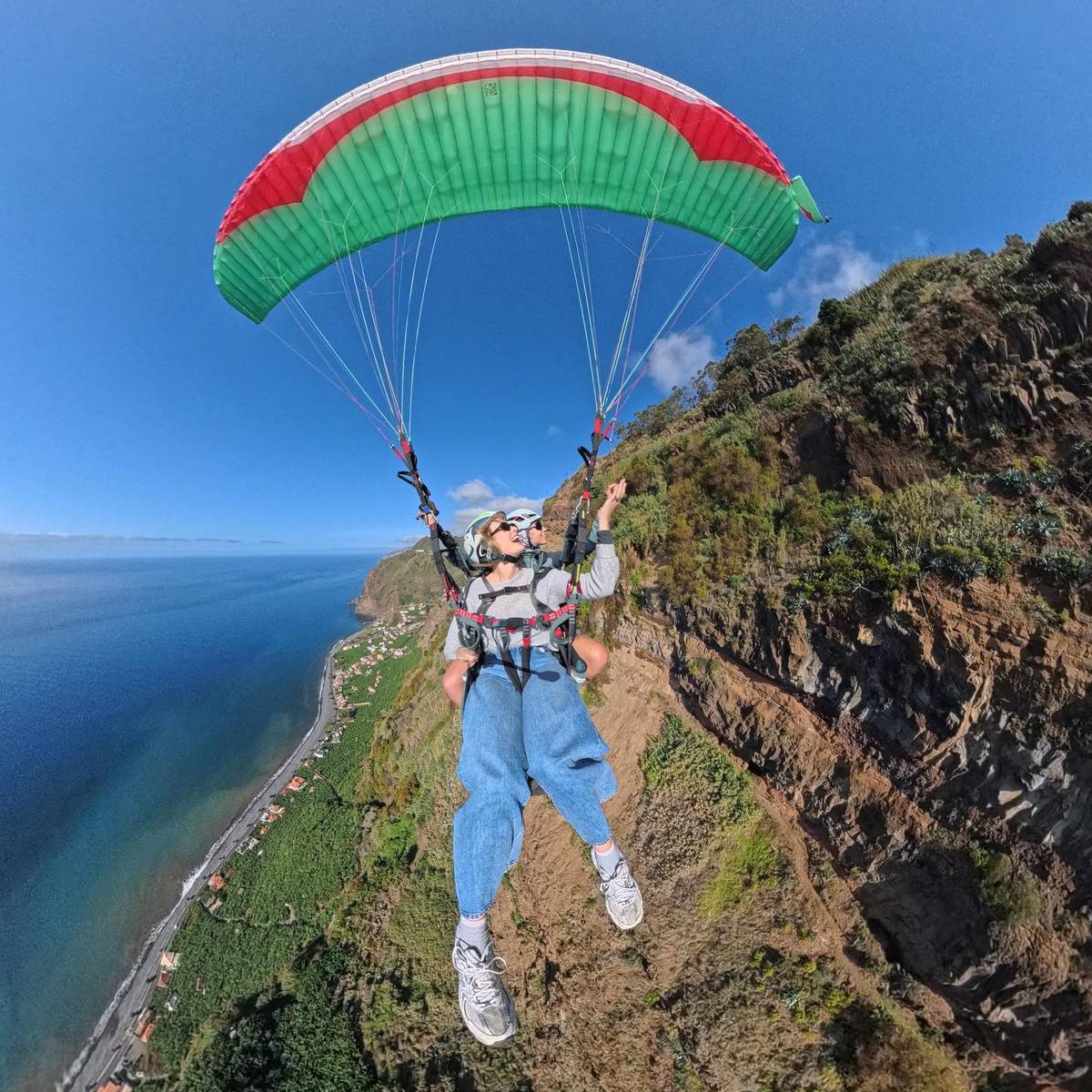
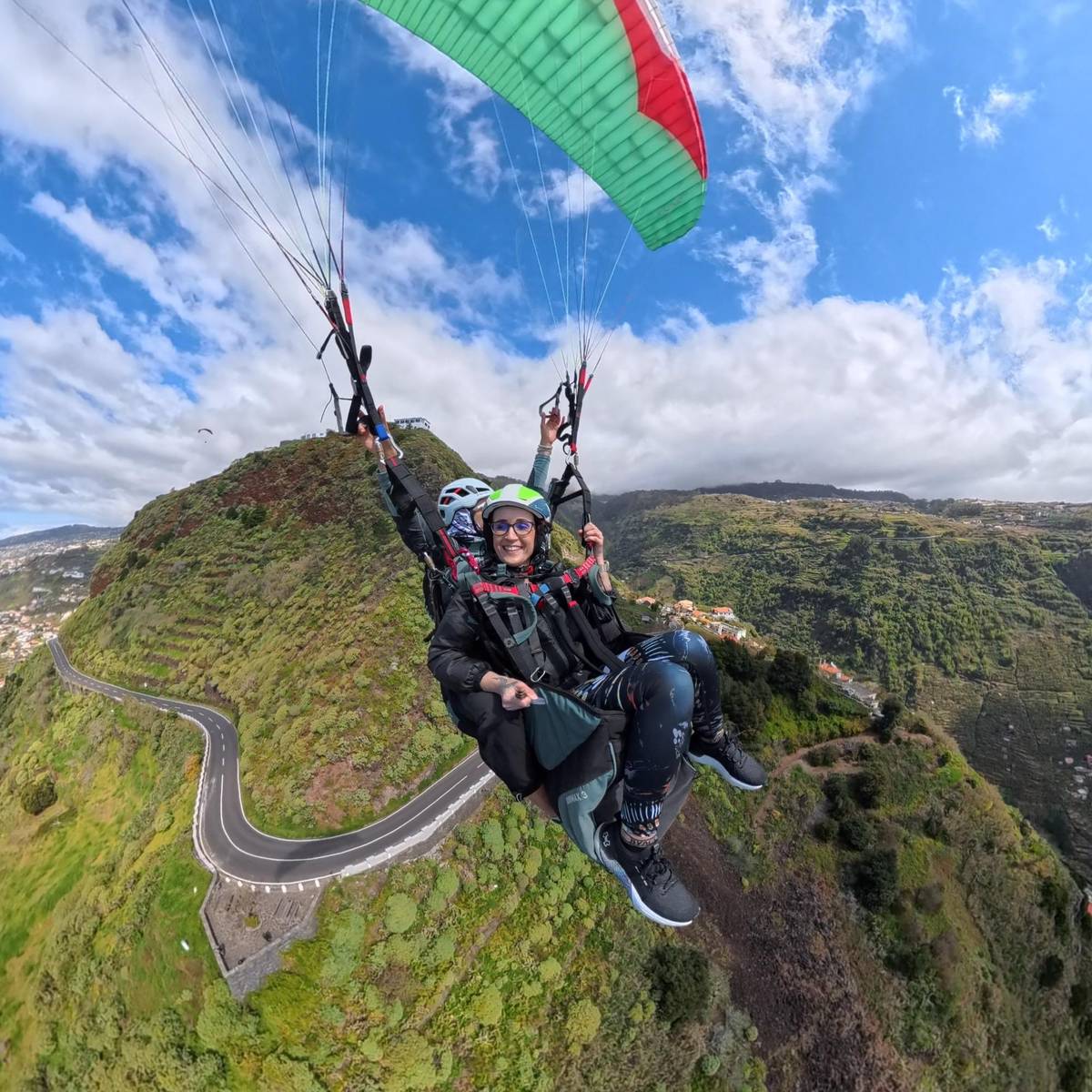
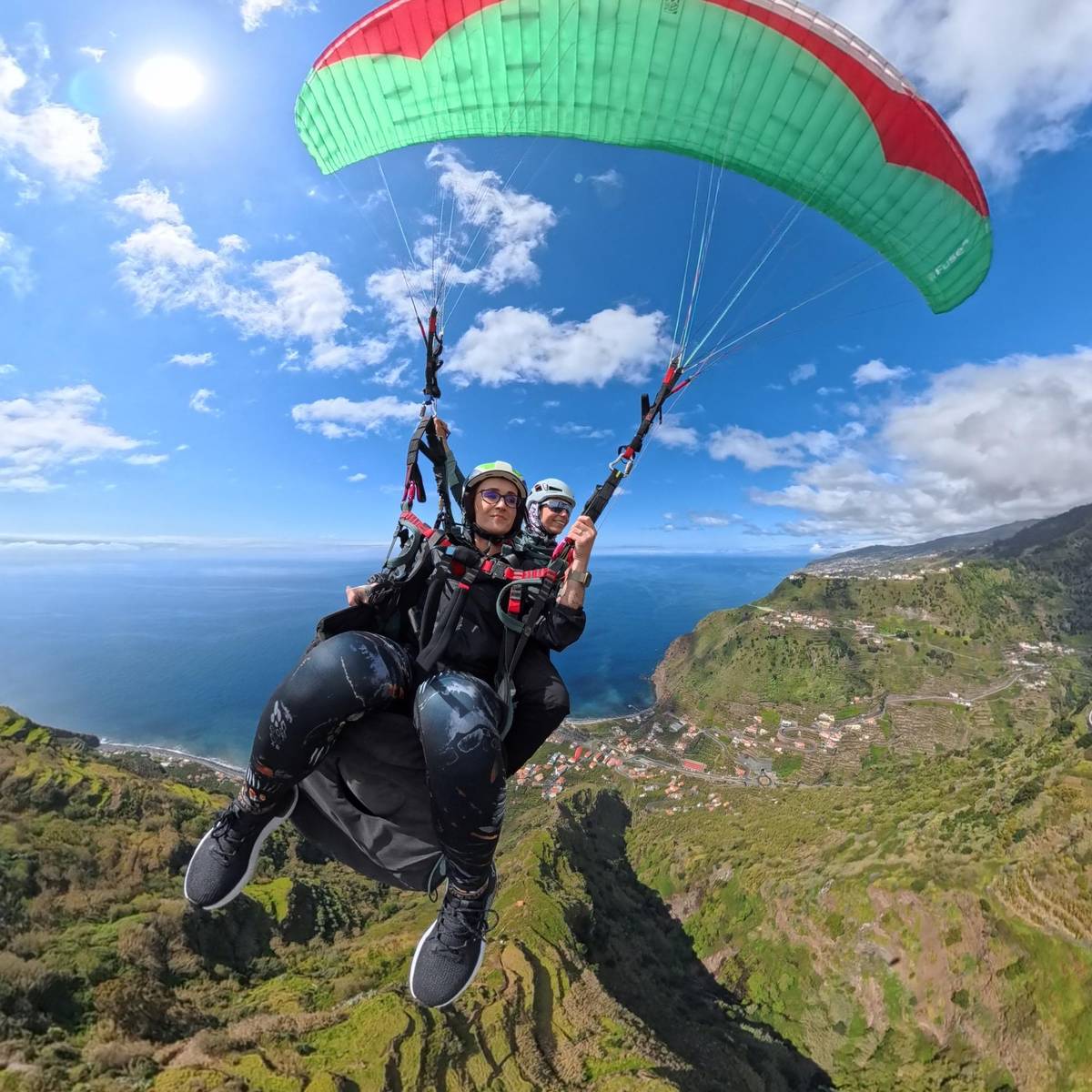
There is also the island's microclimate to consider. The south is usually warmer and drier, while the north and the mountains are more exposed to wind and rain.3 The tour on this page flies in the southwest, near Ponta do Sol, which is considered the sunniest municipality on the island.4 This is an advantage in every season. In the southwest the sun can shine while clouds hang over the center of the island.
Spring: green and mostly friendly
In spring Madeira becomes noticeably drier. In March the station in Funchal still records 6 days with notable rain, in April only 1.2 Daytime highs in April reach 21.1 °C.2 The slopes are green after winter, and the view from the air over the terraces is especially fresh.
For a flight, late spring is often a good compromise. It is pleasantly warm but not hot, and the days are getting longer. In May, the sun is above the horizon for 13.8 hours at midmonth.2 You therefore have plenty of daylight to reschedule to the afternoon or the next day.
Bear in mind that even in spring individual days can be windy or cloudy. The statistics tell you what usually happens, not what the weather will be like on your day. Therefore, do not plan the flight on your last vacation day, but leave room for a second attempt. A free day in the middle of your vacation is ideal for this, because then you can shift forward or backward without having to change the rest of your plan.
Climate
Temperature and rainfall in Funchal, month by month
Hours without sunDays with precipitationSeason
Monthly averages
Sunshine, temperature and rainy days in the year
| Month | Daylight (h) | Darkness (h) | High / Low | Precipitation Days | Dry season |
|---|---|---|---|---|---|
| Jan | 10.2 | 13.8 | 20 / 15 °C | - | rainy |
| Feb | 11 | 13 | 20 / 14 °C | 6 | rainy |
| Mar | 11.9 | 12.1 | 21 / 14 °C | 6 | rainy |
| Apr | 12.9 | 11.1 | 21 / 15 °C | 1 | dry |
| May | 13.8 | 10.2 | 22 / 17 °C | 1 | dry |
| Jun | 14.3 | 9.7 | 24 / 19 °C | 0 | dry |
| Jul | 14.1 | 9.9 | 26 / 20 °C | 0 | dry |
| Aug | 13.3 | 10.7 | 27 / 21 °C | 1 | dry |
| Sep | 12.3 | 11.7 | 27 / 21 °C | 2 | dry |
| Oct | 11.3 | 12.7 | 26 / 19 °C | 6 | rainy |
| Nov | 10.4 | 13.6 | 23 / 17 °C | - | rainy |
| Dec | 10 | 14 | 21 / 15 °C | - | rainy |
Daylight: Hours around mid-month. Temperature: Average of daily highs and lows. Rainfall: Days with 2.5 mm or more. Source: NOAA, reference period 1991 to 2020.2 Season based on rainy days at Funchal station.2
Seasons
Spring, summer or winter
Good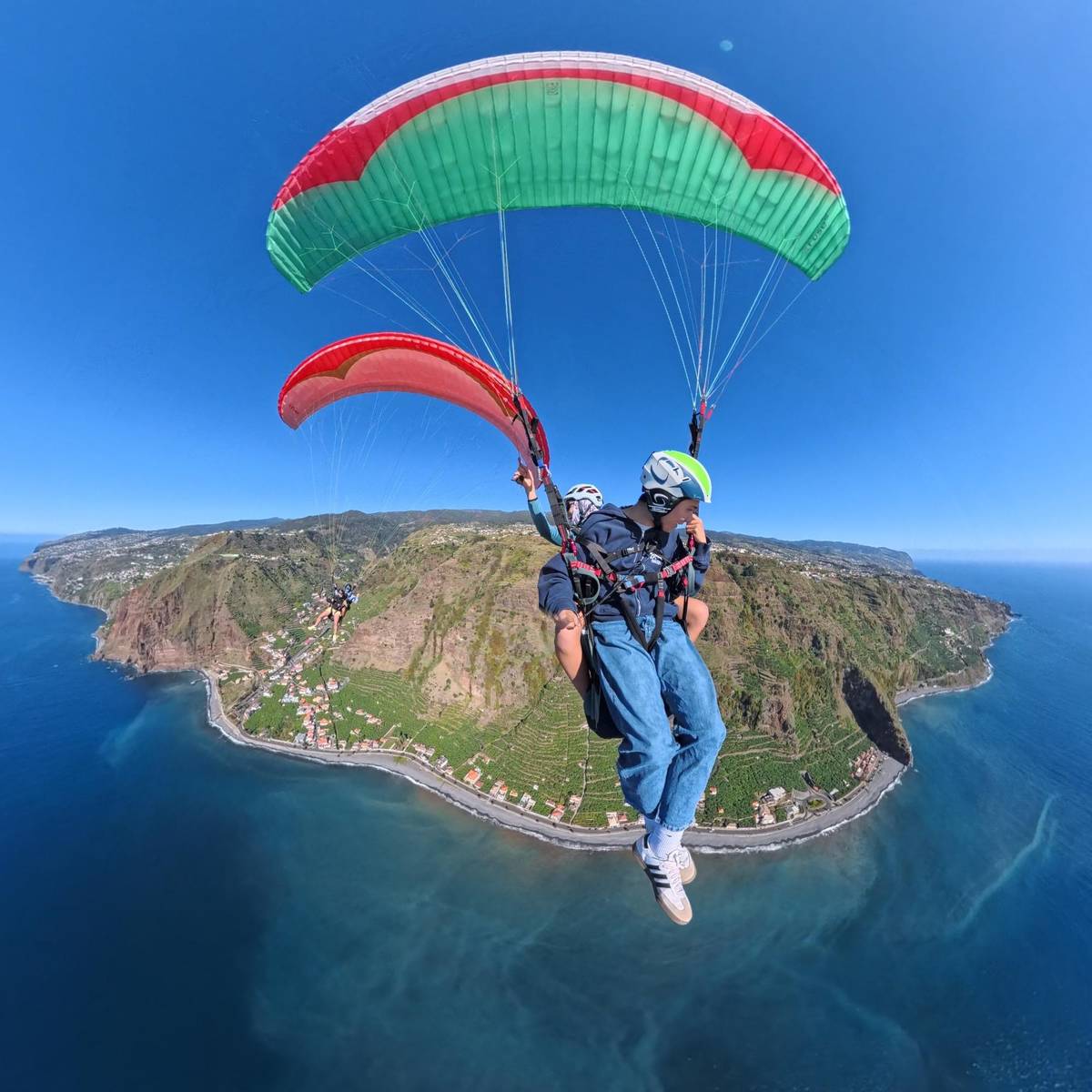 Most reliable
 Be patient
Winter
Mild, shorter days
- January
- 20.1 °C during the day
- Rainy days
- 6 in February
- Tip
- Keep several days open
The Madeira archipelago is known for its mild climate year-round, with average temperatures from 15 °C in winter to 25 °C in summer.
Summer: dry, bright, and warm
Summer is the driest time on Madeira. In June Funchal has no days with notable rain, and in July neither.2 Daytime highs in August rise to 27 °C.2 These are very reliable conditions for a flight, and the view over the sea is often far-reaching.
Anyone flying in summer should think about the sun. The light is strong over the sea, so sunglasses are one of the items the offer explicitly recommends. A windbreaker is nevertheless a good idea, because in the air the wind chill feels cooler than on the beach.
Summer is also peak travel season. Popular dates can sell out earlier, especially for an offer limited to a maximum of 2 participants. If you come in summer, book early and make use of the free cancellation in case your plans change. Those who are flexible often find a date even at short notice, but you should not rely on that during high season.
Checklist
Pack by season
01
Summer
- Sunglasses
- Sun protection
- Light windbreaker
02
Winter
- Warmer layer under the jacket
- Windbreaker
- Plan for several flight days
Video
Plan your Madeira trip: what you need to know beforehand
Only your click on Play brings up the YouTube video.
Autumn: warm but changeable again
September is often still a summer month. Daytime highs reach 26.8 °C, and only 2 days see notable rain.2 The sea is warm, the island is still fully in summer mode, and conditions for a flight are usually good.
From October the picture changes. In this month Funchal records 6 days with noteworthy rain and 60 mm of rainfall.2 It stays warm, with daytime highs of 25.5 °C, but clouds and showers become more frequent.2 Plan for more flexibility in October.
In November there are no reliable rainfall figures for Funchal, but the temperature still reaches 22.9 °C during the day.2 If you fly in autumn, stay flexible and wait for the provider's message rather than pinning yourself down to a specific day. The autumn rewards you in return with a warm sea, less hustle than in summer, and often clearer air after a shower, from which the coast looks especially sharp from above.
Winter: mild, but with short days
Even in winter Madeira is mild. In January daytime highs reach 20.1 °C, in December 20.9 °C.2 This is a great draw for visitors from Central Europe: flying over a green coast while there is snow at home.
However, the days are shorter and the weather more changeable. In December, the sun is above the horizon for only 10 hours at midmonth.2 In February, Funchal records 6 rainy days and 86 mm of precipitation.2 This does not mean that flying does not take place, but cancellations are more likely.
If you want to fly in winter, you should therefore keep several possible days in mind. Book early on your holiday, watch the forecast, and leave the decision to the pilot. Free cancellation up to 24 hours in advance gives you the freedom you need for that. For a winter flight, pack an extra warm layer under your windbreaker too, because it feels noticeably cooler up in the air than down by the promenade.
The weather on the day of the flight
Monthly averages are a useful guide, but the weather on the day itself is what matters. The Portuguese weather service IPMA is responsible for the forecast on Madeira.5 Pilots also rely on their experience with the winds at their launch sites.
A paraglider needs a steady, not too strong wind. Too much wind, gusts, or low-hanging clouds at the launch site can prevent a flight, even on a sunny day. Conversely, the coast can be beautiful while the mountains are shrouded in mist. The pilot sees these differences and decides.
For you this means: look at the forecast, but rely on the provider's message. If he reschedules, that is a sign of care. And if he confirms, you can look forward to flying in conditions that an experienced pilot considers good. Keep your phone handy the day before and in the morning so you receive a rescheduling message in time.
Our pick
If you have a free choice, the period from early spring to early autumn is the most reliable time for a tandem flight. Then it is dry, bright, and warm, and the chance that your date goes ahead is at its greatest. Summer offers the safest conditions, while late spring and September offer the most pleasant temperatures.
If you come in winter, you don't have to miss out on the flight. You just need to bring more patience and plan for several days. The mild air and the green coast make even a winter flight a special experience, especially when the weather at home is grey.
Regardless of the season, the rule is: book early on your holiday, stay flexible, and trust the pilot. Then you have the best chances of seeing Madeira from the air, no matter which month you arrive. The west coast with its terraces, villages, and the wide Atlantic looks different in every season, and each has its own charm from above.
Secure the Flight
Glide over Madeira once.
Book now, pay later, and cancel for free up to 24 hours before.


You ask,we answer.
Can you fly on Madeira all year round?
Essentially yes. The island is mild all year round, averaging 15 °C in winter to 25 °C in summer.1
Which month is the driest?
June and July. In both months the Funchal station records no day with noteworthy rain.2
When does it rain the most?
In the winter half of the year. From October to March, it rains more frequently; in February, Funchal records 86 mm of precipitation on 6 rainy days.2
How warm is it in winter?
Around 20 °C during the day. In January the average daytime high is 20.1 °C.2
Is the south better for flying than the north?
Usually drier. The south is generally warmer and drier, the north windier and rainier.3
Who decides whether a flight goes ahead on the day?
The pilot. He assesses the wind and cloud at the launch site; the forecast comes from the weather service IPMA.5
What if my flight is cancelled due to weather?
Reschedule or cancel. Cancellation is free of charge up to 24 hours before the appointment.
Sources
What this guide is based on
- 1Madeira Promotion Bureau (Visit Madeira)Weather in Madeira↩
- 2↩
- 3Madeira Promotion Bureau (Visit Madeira)Weather in Madeira↩
- 4Madeira Promotion Bureau (Visit Madeira)Ponta do Sol↩
- 5Instituto Português do Mar e da Atmosfera (IPMA)IPMA - Previsão descritiva↩
Read more